
The biggest struggle of living in Norway
How did I not see this coming

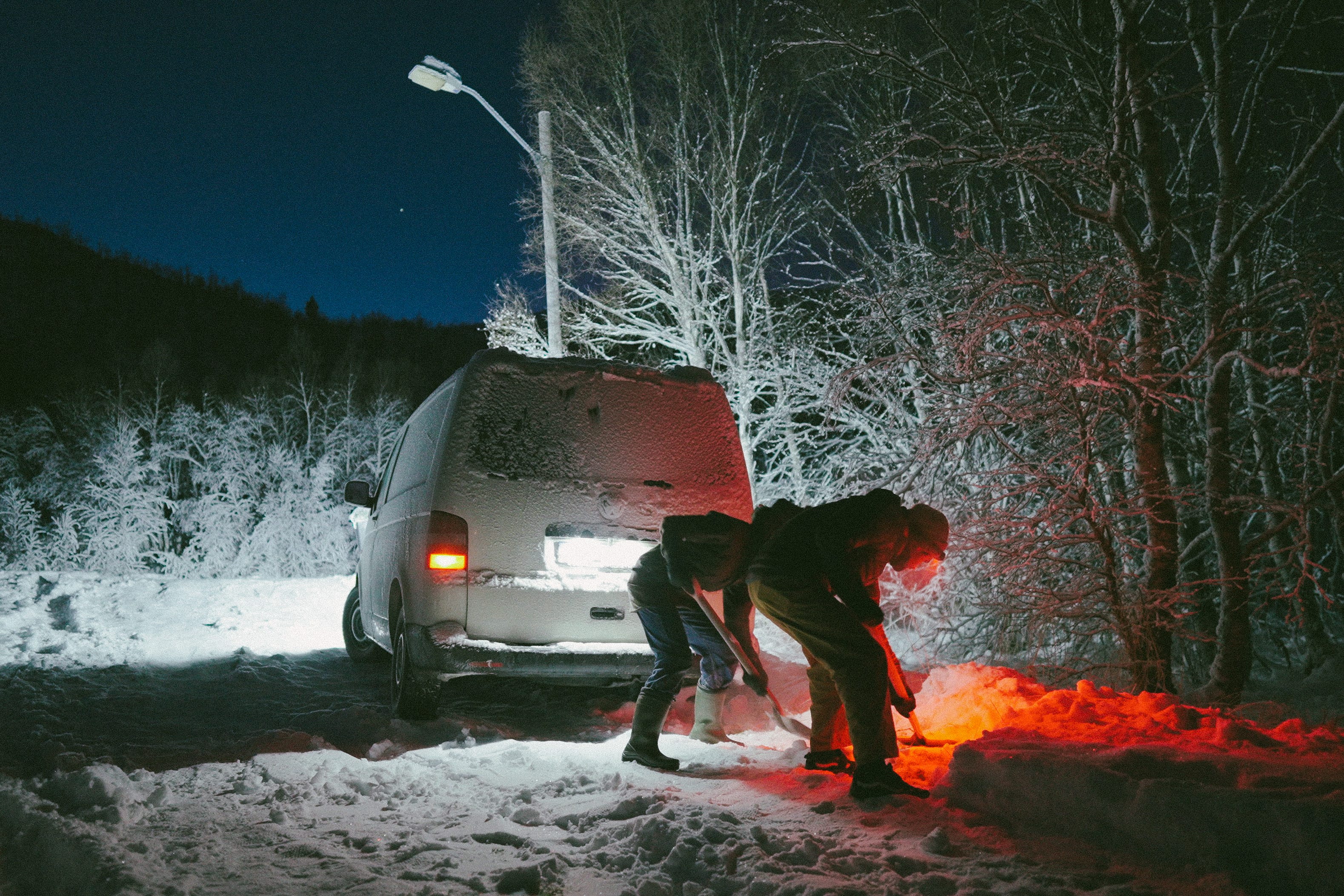
This winter, we thought we would manage just fine with our dear Volkswagen and a good set of winter tires.
Well, we didn’t.
Let me take you through the two recurring winter scenarios that kept showing up, again and again.
Scenario one usually happened early in the morning, when I had to leave for work.
Especially when it had snowed heavily during the night, our inclined driveway would transform into a ski slope. Our Volkswagen was simply not made for this, and would just refuse to go up.
So there I was, shoveling snow at 06:00 a.m., hoping I would still make it to work on time.
Slowly, I tried to get the car moving, bit by bit. I spread gravel and placed some of those plastic traction mats under the tires. But they would just fly away the moment I pressed the gas.
Running late, I could feel the frustration, stress, and impatience building up.
Meanwhile, Bernardo stood behind the car, pushing with everything he had. Eventually, the car would start to move. And at that point, there was only one way out: accelerate.
So I pressed the pedal, fuelled by all that built-up tension and stress, which made me quite the expert at pressing the gas a little too hard…
And that brings us to scenario two.
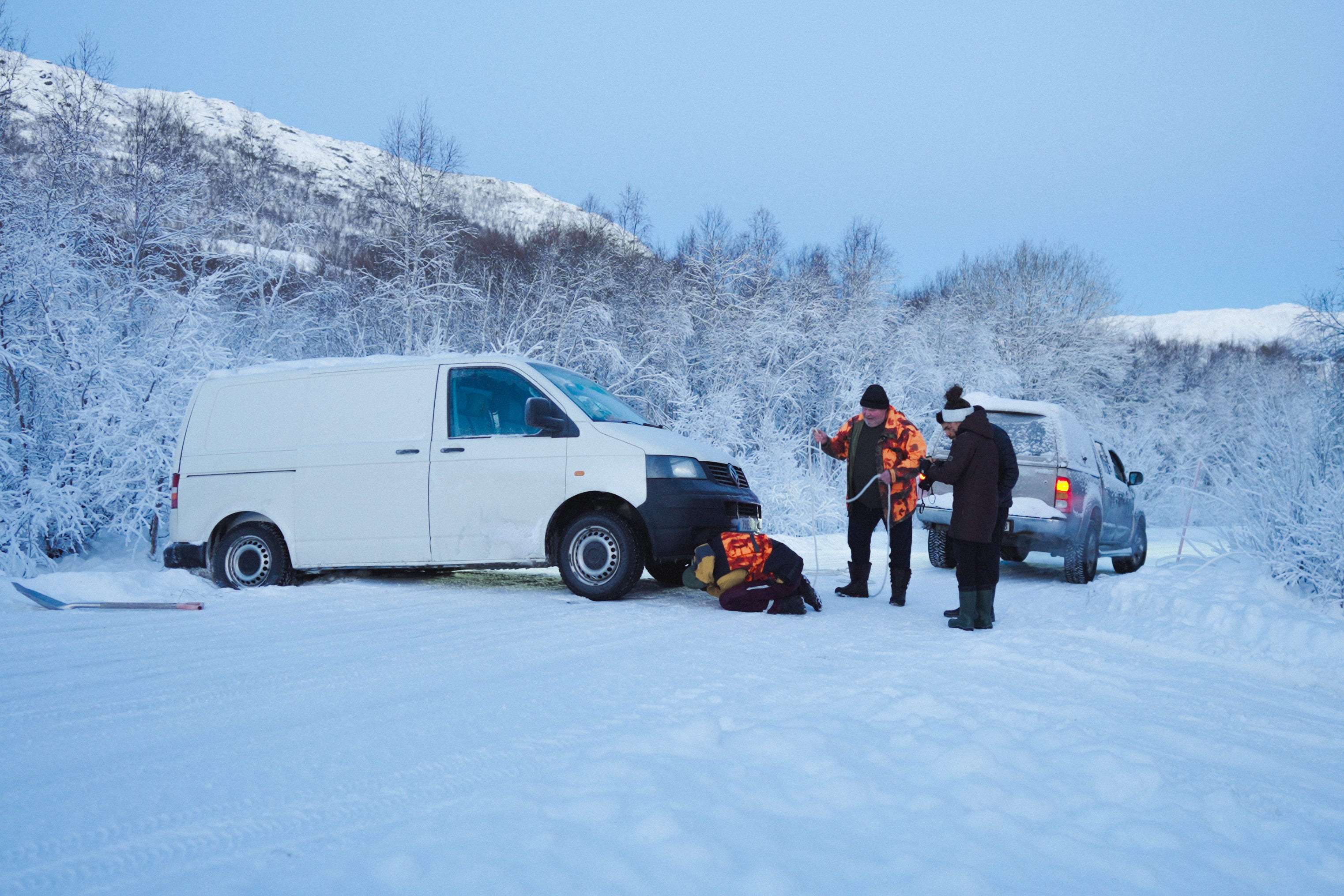
If I pressed too hard, the car wouldn’t stop at the road. It would slide all the way to the ditch, straight into the deep snow.
So there I was again, at 06:30 a.m., accepting I would be late for work.
Honestly, in temperatures dropping to -15°C, this was far from the calm Norwegian winter morning I had imagined. But anyway.
The second scenario had one interesting element.
In our small village, there’s only one place people go to early in the morning: the salmon factory. And with just one road running past our house, all the employees drive by.
In other words: it was always the same people being present at the crime scene.
The same friendly Norwegians would step out of their cars, again and again, to rescue me out of the snow. They pushed, gave instructions, climbed into the passenger seat to steer, or crawled underneath the car to attach a rope.
After a while, we started recognizing each other. It almost felt like we had developed a shared morning routine.
“Ah… there she is again.”
Whenever they helped me, I felt really grateful. But also helpless. A little embarrassed. Dependent. All of it, at once.
Out of that discomfort, I tried to show that I was at least prepared. I had everything ready: a rope, gravel, traction mats, two shovels (one for me and one for my savior).
“Eh… guys, do we need this?” I would ask, hoping I could contribute something to the mess. Most of the time, none of it was even used. But at least I felt prepared for my own rescue.
In the end, there were only two things that really worked:
A 4x4.
Or a proper Norwegian.
Luckily, there are plenty of both around here.
And even more luckily, helping each other seems to be part of the Norwegian nature. It comes naturally, and I’m incredibly grateful for that.
So I might as well take this moment to say tusen takk (a thousand thanks) to all the salmon factory employees, and the other villagers who never once hesitated to stop and help. Not once did I sense impatience or frustration. Just kindness, every single time.
Turns out, surviving winter here is about having the right equipment, but even more about having the right people around you.
I guess that’s why I survived.
Thank you for coming along!
Jule Noah
Dear Jule Noah, something about your way of telling a story makes me stand here reading your words with a big smile. I’d love to read much, much more from you. And a big round of applause for your rescuers, the heroes of the salmon factory.
Good to hear no bigger troubles came while driving on snow. Did you buy snow chains for the tires already?
Or next year maybe you guys need a 4X4 car haha